Reported News
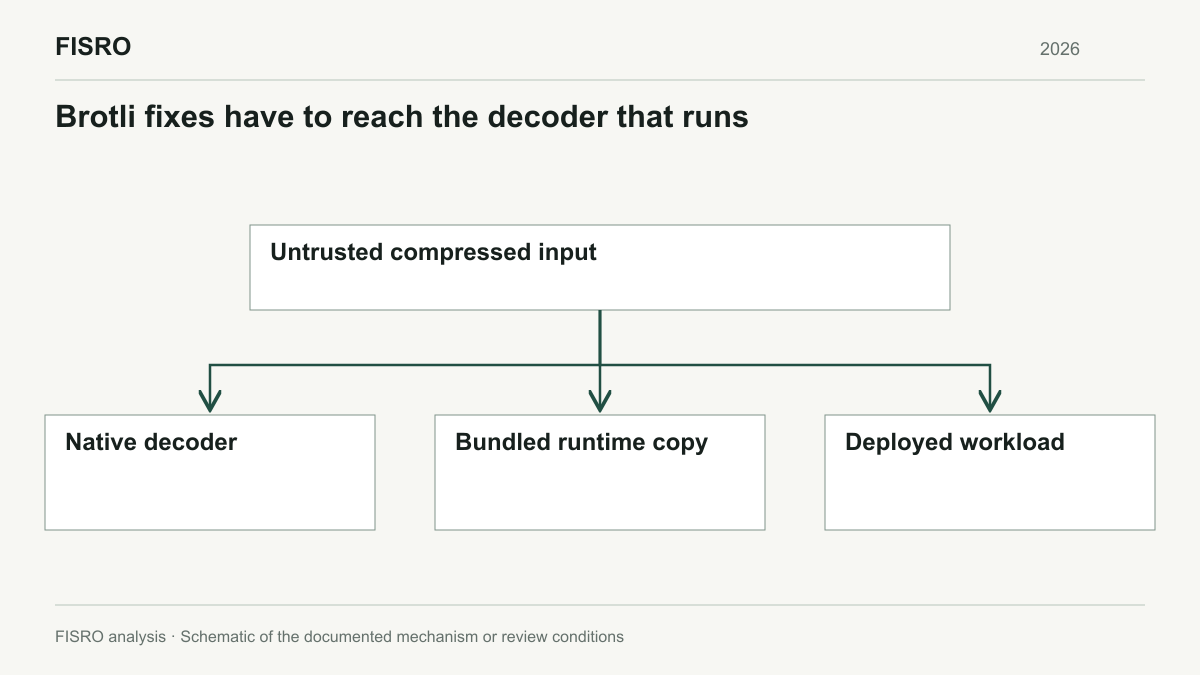
Brotli fixes have to reach the decoder that runs
CVE-2026-111497 crosses libraries, runtimes and managed deployments. Verify the decoder in the actual workload.
Event / disclosure
Security cases, technical advisories and analysis. Browse the record by event date, subject or product.
24 publications. Browse by event date below, or use the incident archive for a year-by-year view. Publication dates appear on each article.
CVE-2026-111497 crosses libraries, runtimes and managed deployments. Verify the decoder in the actual workload.
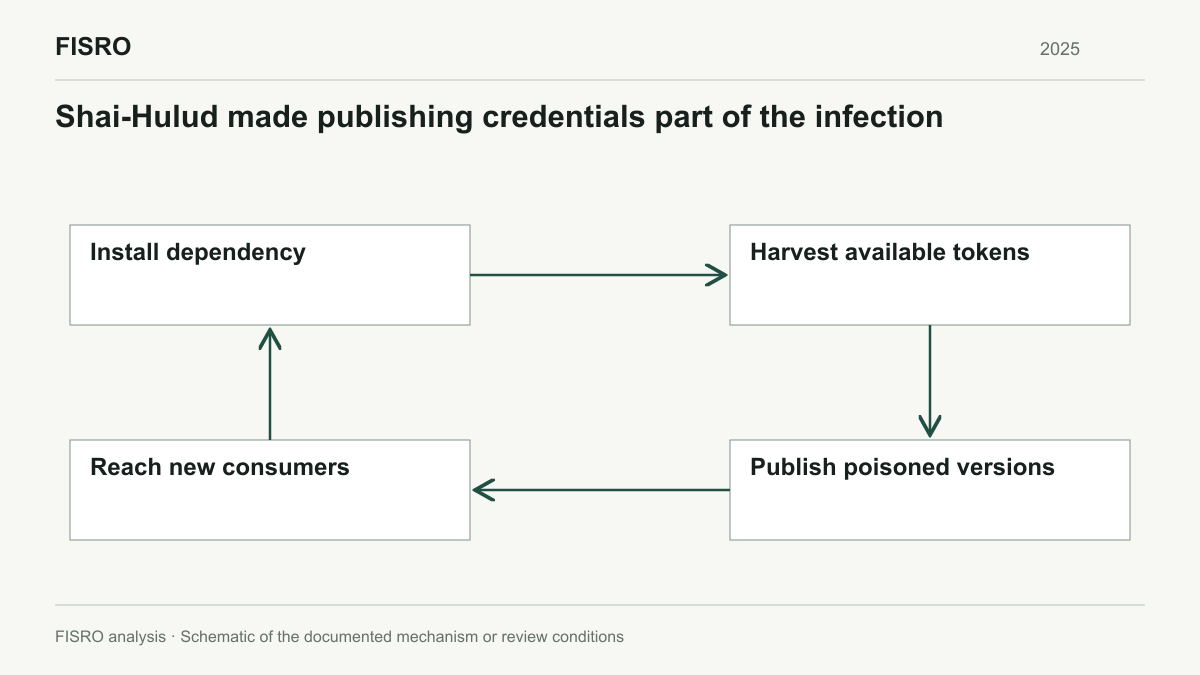
The first Shai-Hulud wave linked dependency installation to secret theft and further package publication.
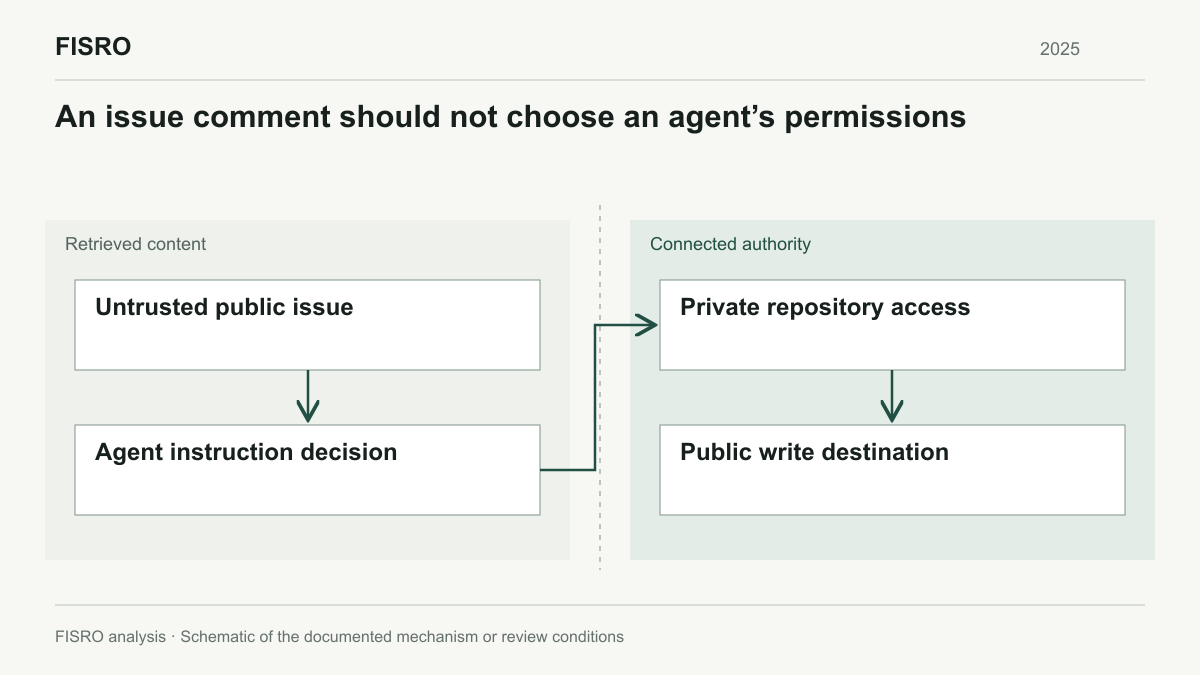
A GitHub MCP demonstration shows how untrusted issue text can be promoted into unintended tool use.
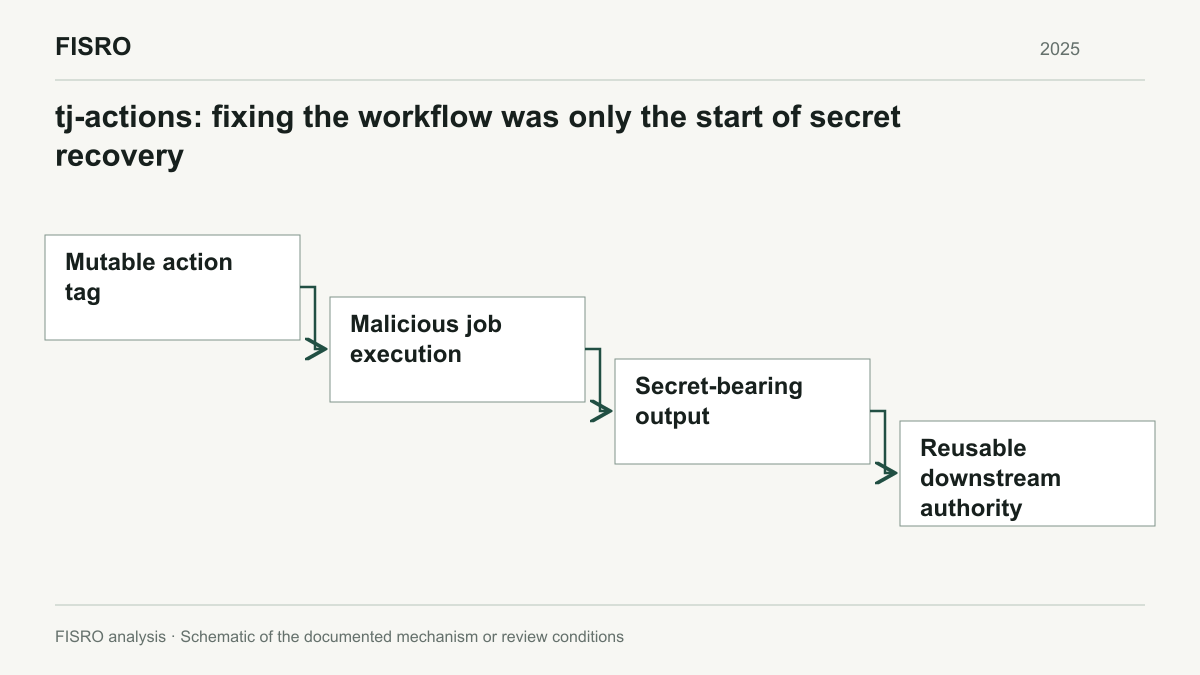
The March 2025 compromise connected mutable action tags, secret-bearing logs and credentials that could outlive the malicious code.
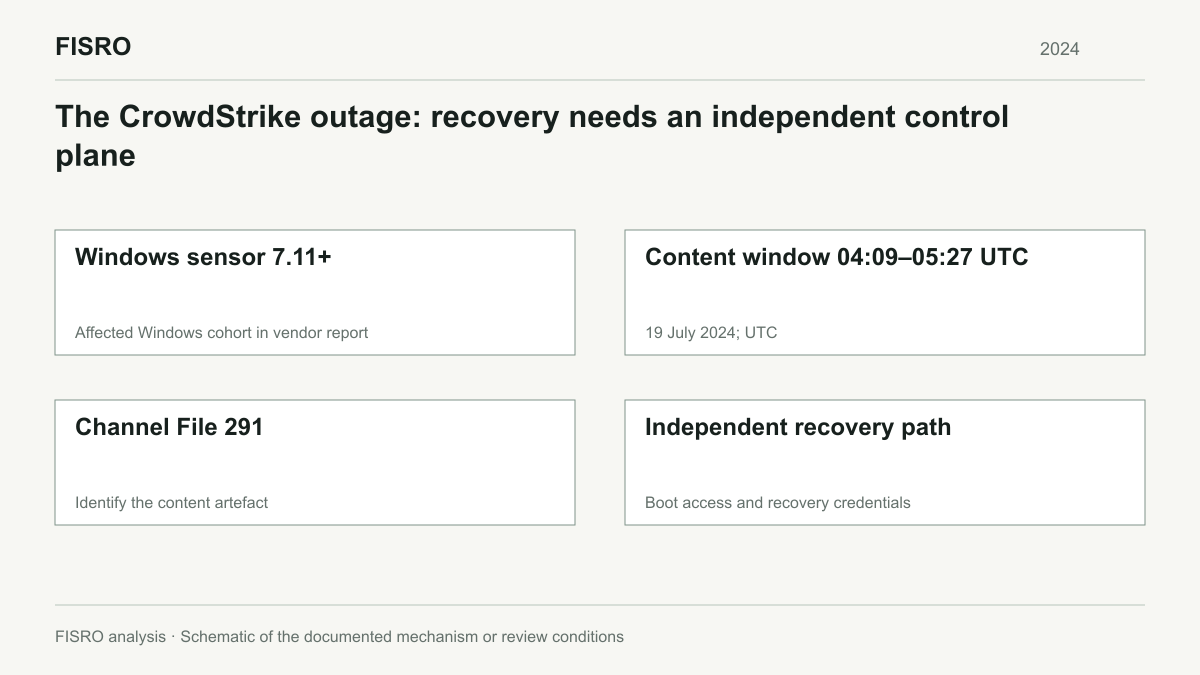
The July 2024 content-update failure made boot paths, recovery access and correlated dependencies part of the security conversation.
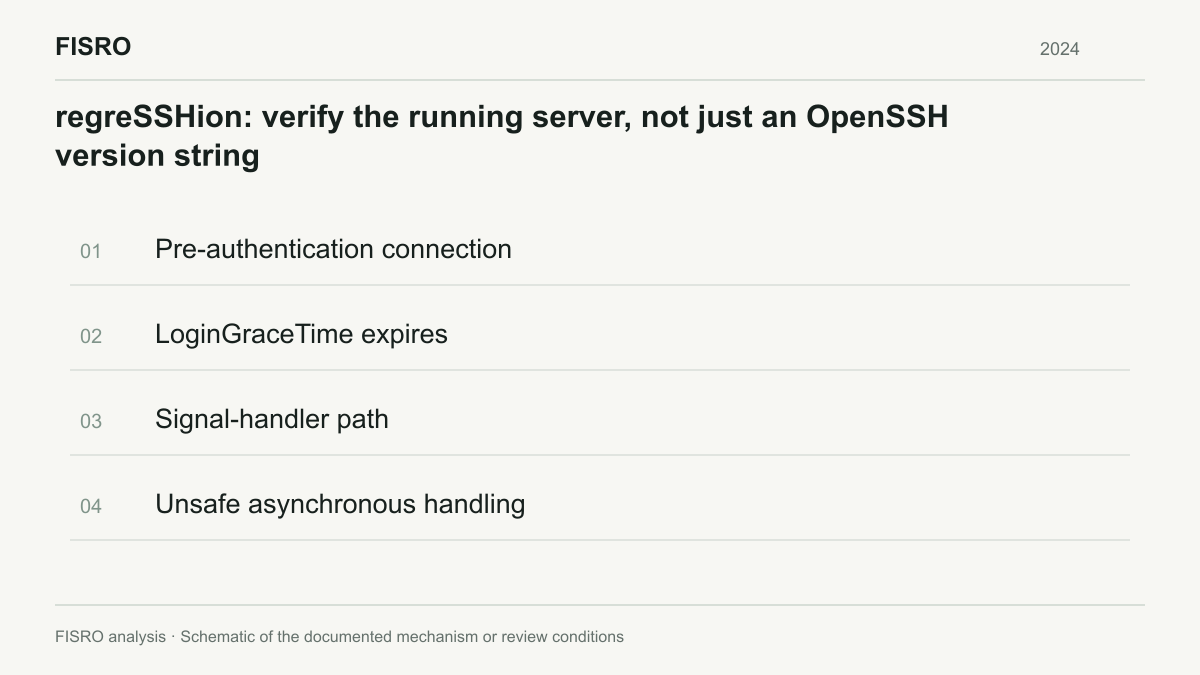
A pre-authentication race condition showed why SSH keys, package backports and server patch state belong in separate checks.
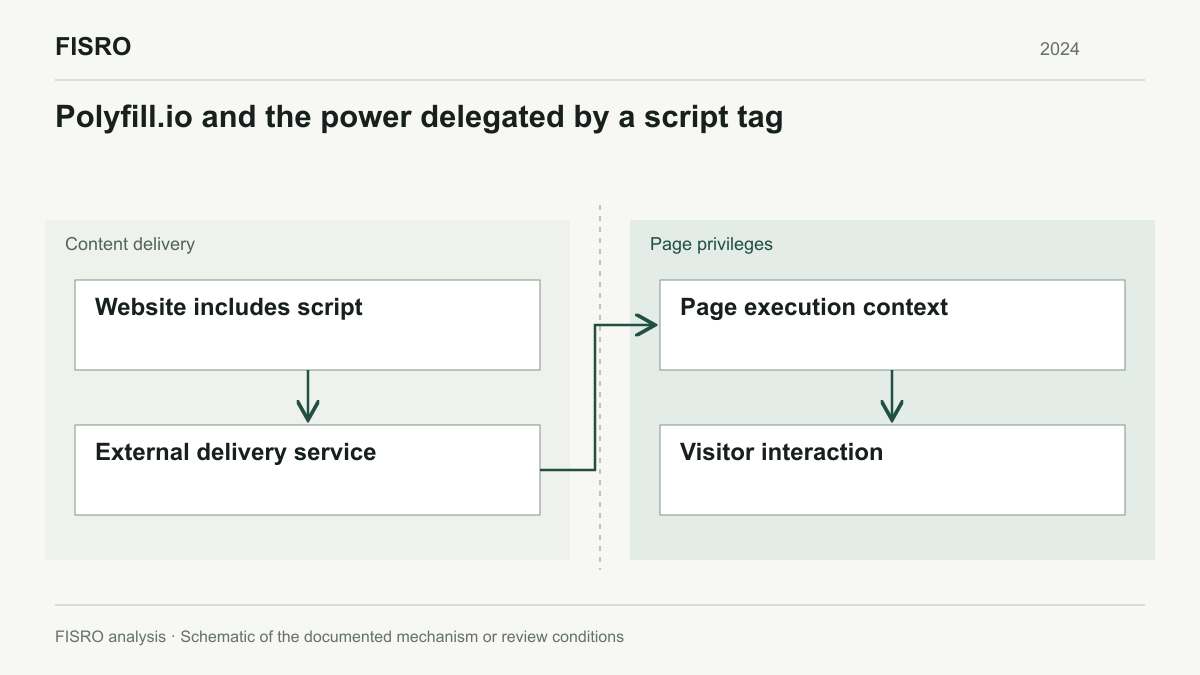
A third-party script can change a trusted page. The polyfill.io case makes that delegation explicit.
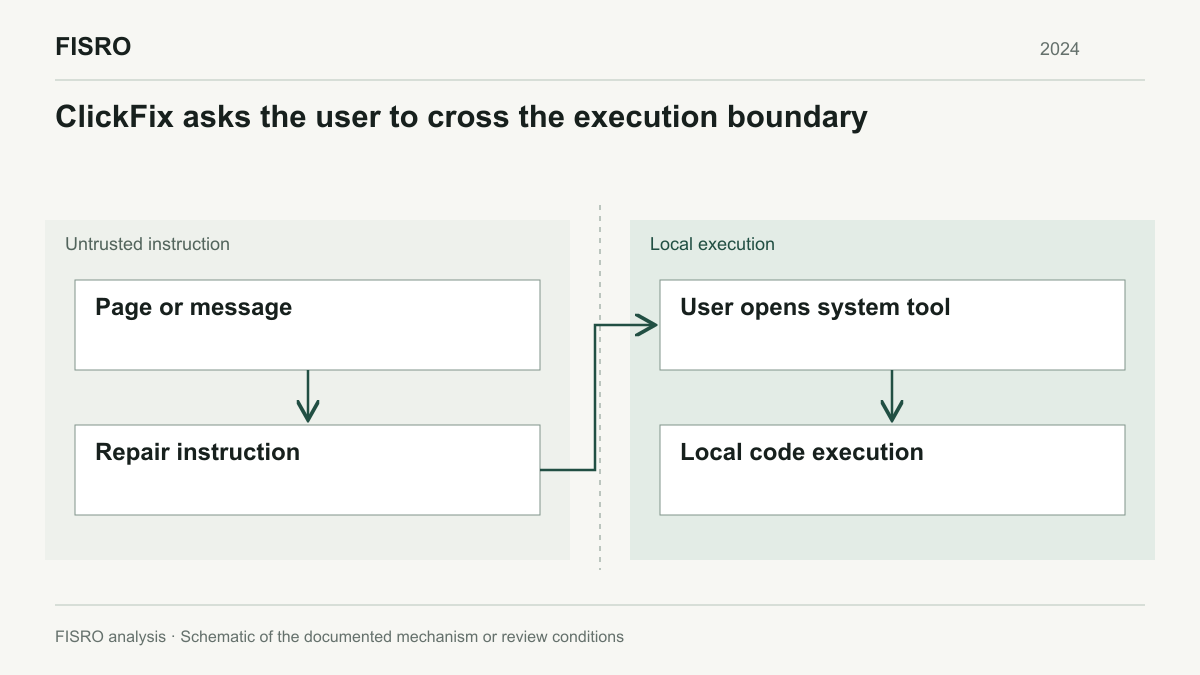
A repair prompt can be a malware-delivery step. Investigate the requested action and whether it actually ran.
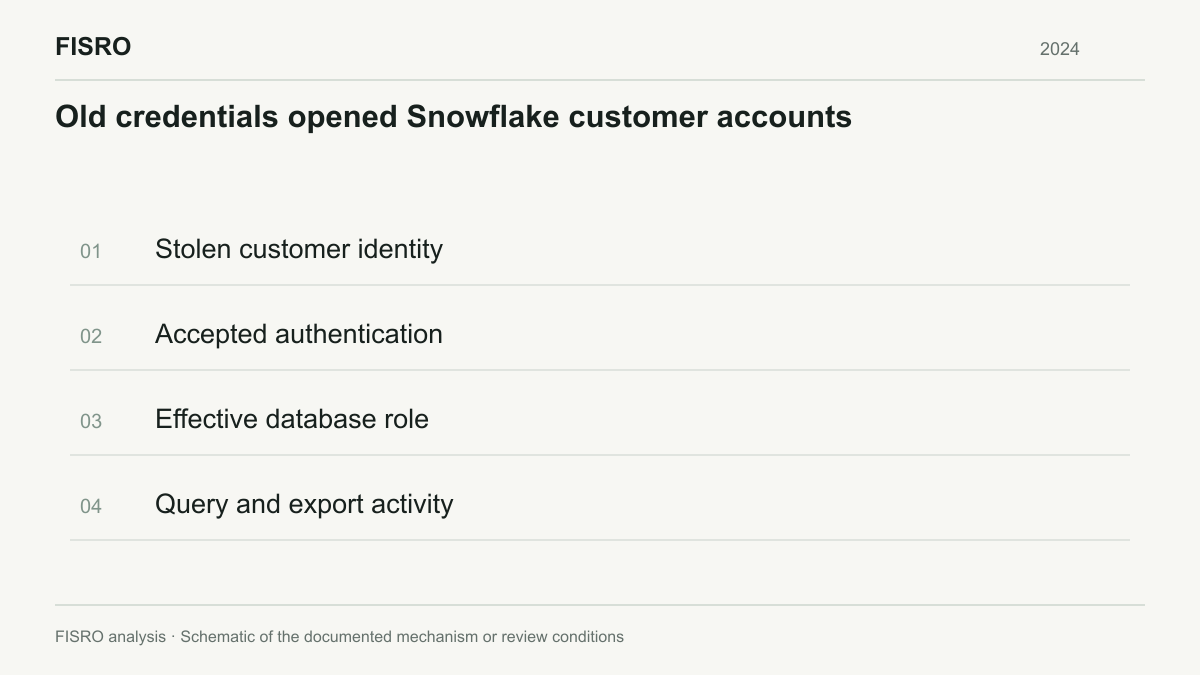
The 2024 Snowflake customer-account campaign followed stolen identities into database access and data export.
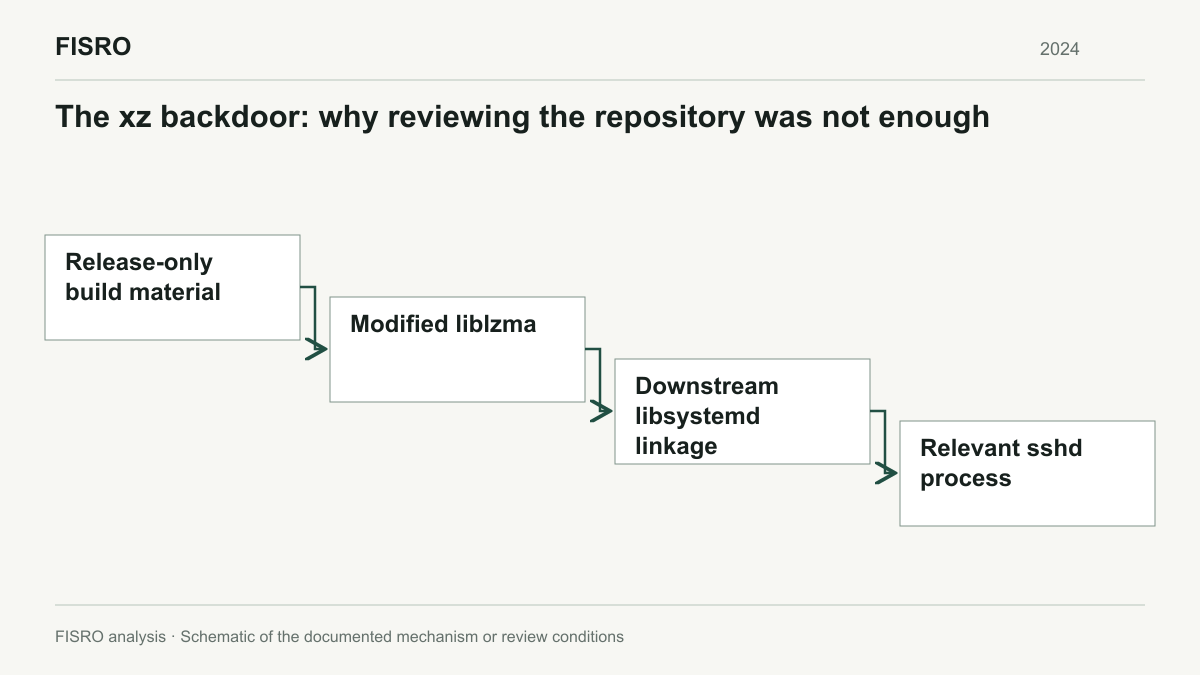
The 2024 disclosure put release archives, generated build files and distribution-specific build conditions inside the trust boundary.
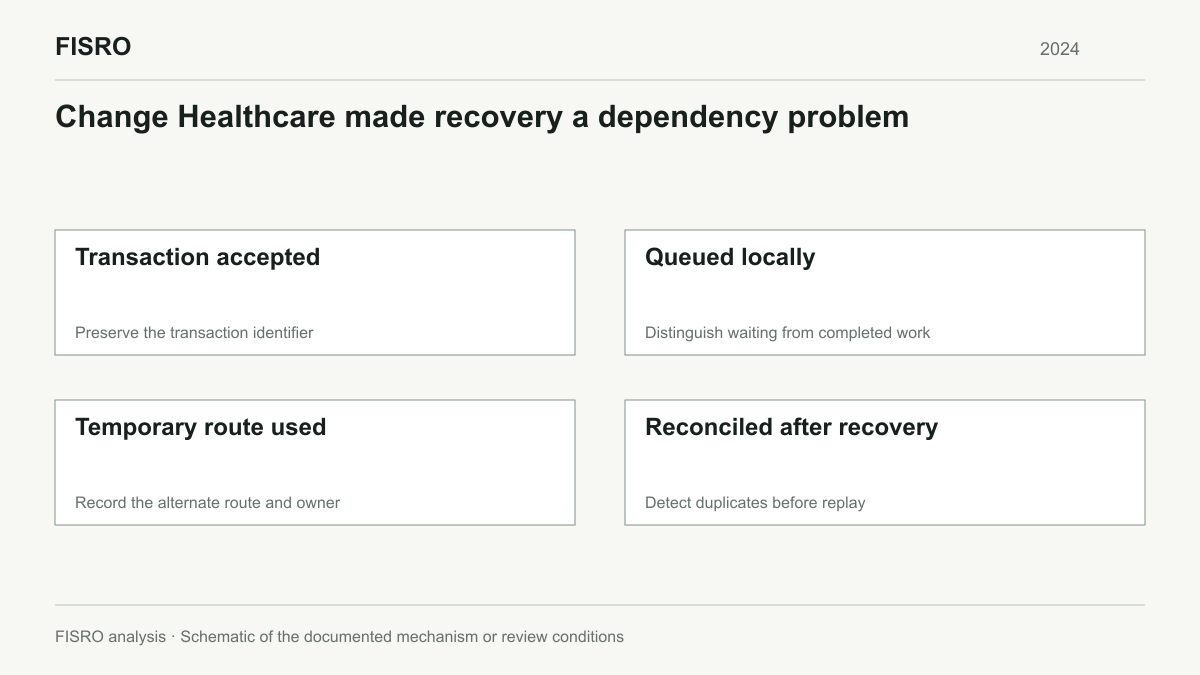
The 2024 response shows why transaction state and temporary recovery routes belong in continuity planning.
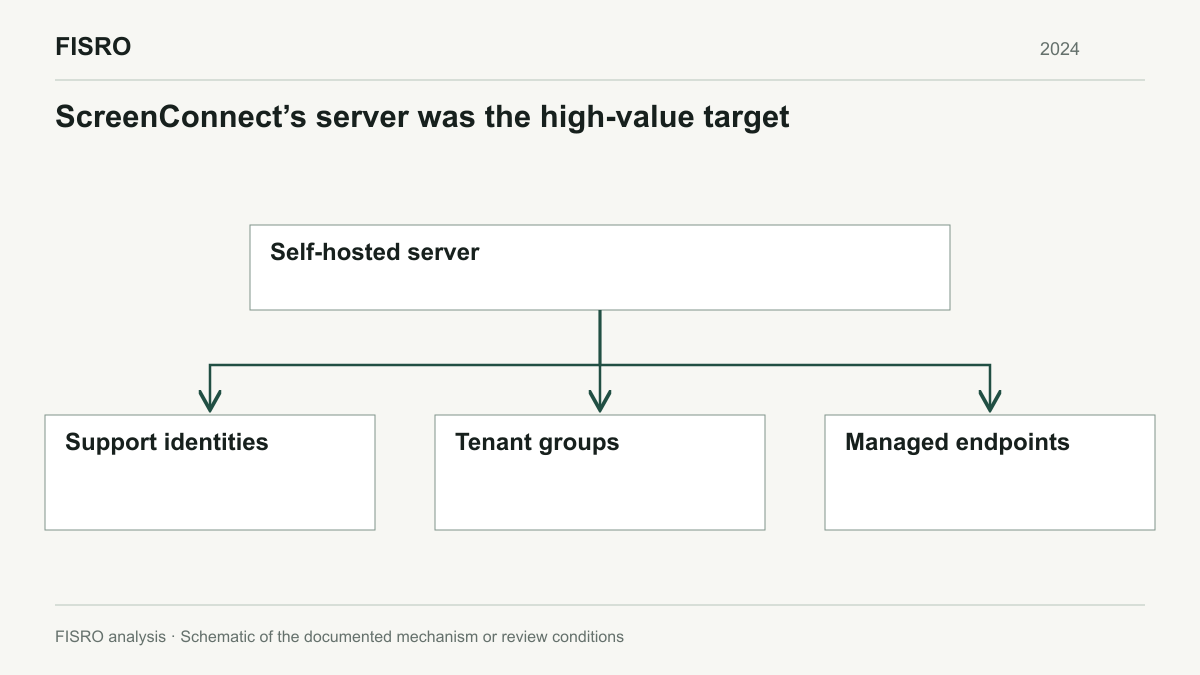
The February 2024 ScreenConnect flaws put server ownership, administrative reach and tenant boundaries in the response scope.